Winchester sits in a hot-summer Mediterranean climate where dry summers push homeowners to run evaporative coolers and portable AC units for weeks on end. Those units often leak into wall cavities or under cabinets in homes built before 2005 in Winchester Ranch and French Valley. Once moisture sits against drywall or OSB, Stachybotrys and other toxigenic species take hold within 48 hours. We see this most often in single-story ranch houses on raised foundations where the crawlspace never dries out after the brief winter rains.
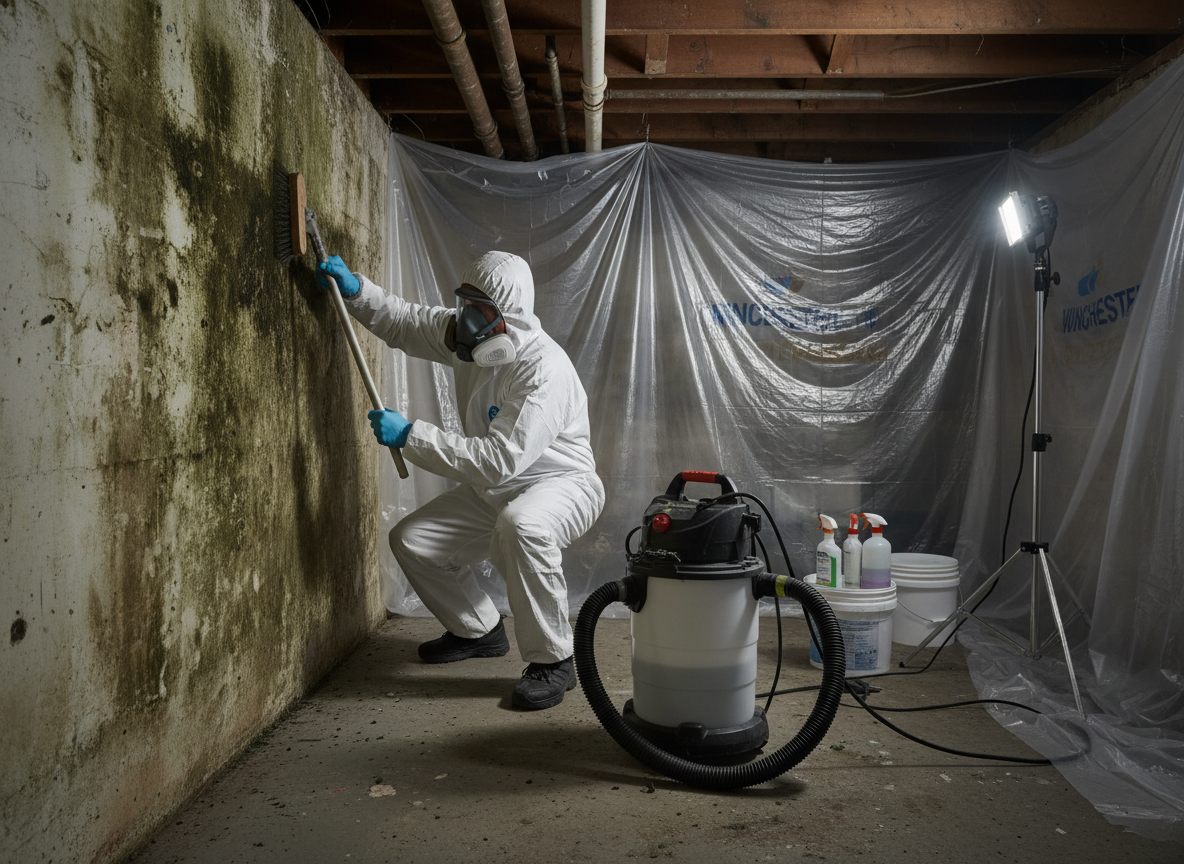
Diamond Valley Lake and the surrounding low-lying terrain create pockets of poor drainage around many lots in Winchester Hills. Irrigation overspray from neighboring properties or cracked sewer laterals common in 1980s plumbing add steady moisture that never reaches the surface. Removing the mold requires cutting back to sound substrate, negative-air containment, and HEPA scrubbing before any reconstruction. Skipping the source fix almost always brings the growth back within one rainy season.
Riverside County code requires proper disposal of contaminated materials and documentation of moisture readings before clearance. We document every step with photos and moisture logs so homeowners in Menifee, Temecula, or Hemet who later sell the property have the records buyers and inspectors expect. Work is performed from our base at 35952 Winchester Rd with crews available around the clock.
Technician insight
In Winchester, the thing that catches most people out with toxic mold removal is the raised foundations on 1980s and 1990s homes in French Valley. Homeowners fix the visible spot in the bathroom but never check the crawlspace where constant irrigation drip from the side yard keeps the soil damp year-round, so the mold simply regrows behind the new drywall.
Hidden Growth After AC Leak in Winchester Hills
A homeowner in Winchester Hills noticed a musty smell near the hallway closet after running a window AC unit through the summer. Inspection found the condensate line had dripped behind the wall for months, feeding mold on the back of the drywall and into the insulation. We contained the room, removed the affected materials down to the studs, dried the cavity, and treated the remaining framing. The smell disappeared and follow-up testing showed spore levels back to normal outdoor counts.
How it works
- 1
Inspection and Moisture Mapping
We start with thermal imaging and moisture meters to locate every wet pocket in Winchester homes, checking attics, crawlspaces, and behind showers.
- 2
Containment Setup
Negative-air machines and plastic barriers isolate the work area so spores do not spread into living spaces or HVAC systems.
- 3
Removal and Cleaning
Affected drywall, insulation, and trim are removed; remaining surfaces are HEPA-vacuumed and treated with EPA-registered antimicrobials.
- 4
Drying and Clearance Testing
Industrial dehumidifiers and air movers run until moisture levels meet industry standards, followed by third-party air sampling when requested.
Pricing
Cost depends on square footage affected, whether crawlspace or attic access is needed, and how many rooms require containment.