Winchester sits in Riverside County under a hot-summer Mediterranean climate where dry summers push residents to run evaporative coolers and older HVAC systems for months. Many homes in Winchester Ranch and French Valley were built before 2005 with crawlspaces and slab foundations that trap moisture from occasional winter rains or irrigation leaks near Diamond Valley Lake. When these conditions combine, mold colonies often form behind baseboards, in attic insulation, and along stucco-to-wood transitions common in the area’s ranch-style houses.
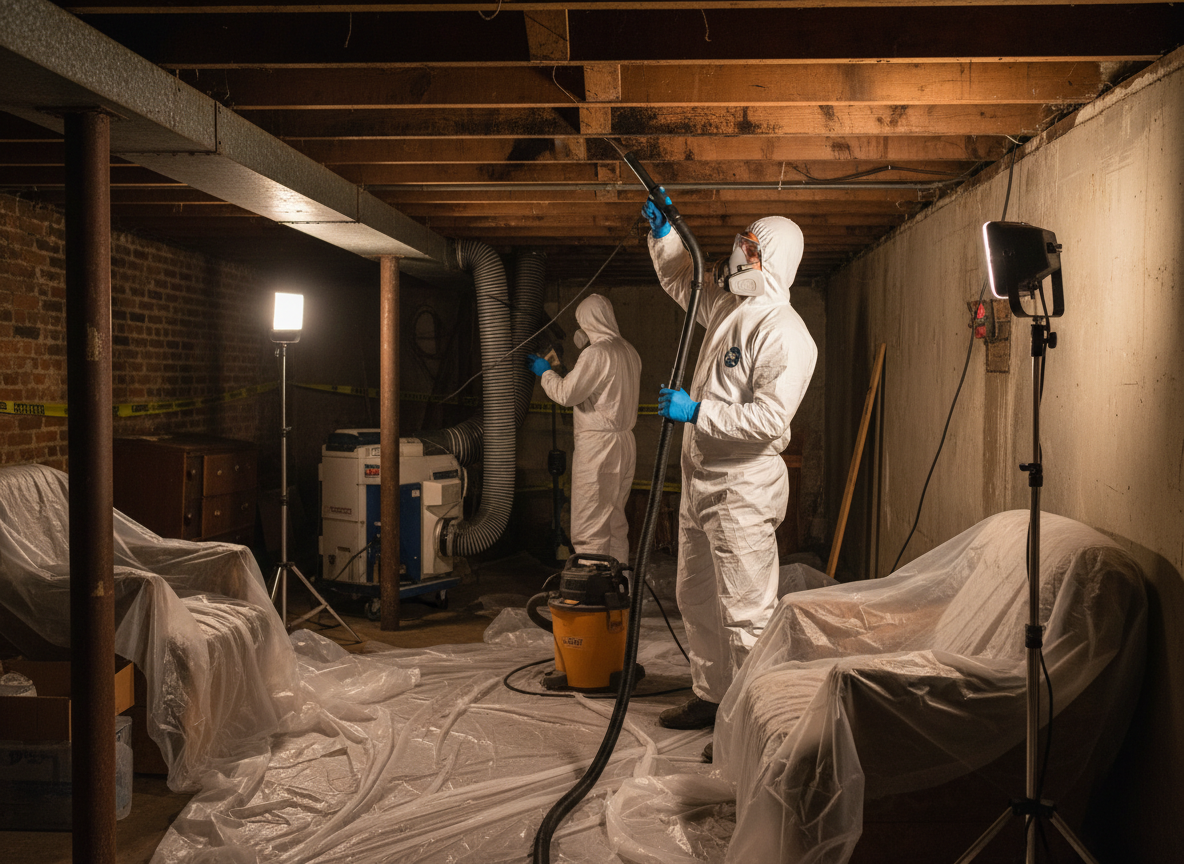
Professional mold removal here starts with containment using negative-air machines to keep spores from drifting into living spaces, followed by HEPA vacuuming and removal of affected drywall or subfloor. In neighborhoods like Winchester Hills, technicians frequently encounter hidden growth in wall cavities where original kraft-faced insulation has absorbed condensation from unconditioned attics. Surface antimicrobials are applied only after source moisture is corrected, because simply spraying over active leaks allows regrowth within weeks during the brief rainy season.
Homeowners in nearby Menifee and Temecula often call after noticing musty odors near laundry rooms or bathrooms where older galvanized plumbing has begun to weep. Removal crews cut out sections of affected material rather than attempting bleach cleaning on porous surfaces, then dry the cavity with commercial dehumidifiers sized for the square footage. Final clearance testing confirms spore counts match outdoor baselines before any reconstruction begins.
Technician insight
In Winchester, the thing that catches most people out with professional mold removal is assuming a quick surface wipe will fix it. Older homes in French Valley and Winchester Hills often have moisture trapped under stucco or in unvented crawlspaces fed by irrigation near Diamond Valley Lake, so the real fix always starts with locating and stopping that hidden water source before any removal begins.
Hidden Growth Behind Bathroom Vanity
A Winchester Hills homeowner noticed a persistent musty smell after winter rains. Inspection revealed water had wicked up from a slow slab leak into the particleboard vanity base and subfloor. Crews removed the vanity and 18 inches of drywall, dried the cavity, and confirmed clearance before the owner’s plumber replaced the supply line.
How it works
- 1
Initial Assessment
Technician inspects affected rooms, checks crawlspaces and attics common in Winchester Ranch homes, and uses moisture meters to map hidden water intrusion.
- 2
Containment Setup
Plastic barriers and negative air machines isolate the work zone so spores do not spread to unaffected areas of the house.
- 3
Removal and Cleaning
Damaged porous materials are removed, surfaces are HEPA-vacuumed and treated, and HVAC systems are cleaned if mold has entered ducts.
- 4
Drying and Verification
Commercial dehumidifiers and air movers dry the structure, followed by post-remediation air sampling to confirm levels match outdoor baselines.
Pricing
Cost depends on square footage affected, depth of hidden growth in crawlspaces or attics, and whether HVAC cleaning is required.