Mold odors in Winchester often trace back to hidden moisture trapped in wall cavities or under slab foundations after rare winter rains in our hot-summer Mediterranean climate. Homes built before 2000 in Winchester Hills and French Valley commonly have older HVAC systems that pull humid air from crawlspaces during dry summer months, allowing spores to colonize behind baseboards and in ductwork without visible growth on surfaces. Effective odor removal requires locating the actual moisture source rather than masking smells with foggers, because untreated cellulose in older framing will continue releasing musty compounds once temperatures climb above 90 degrees.
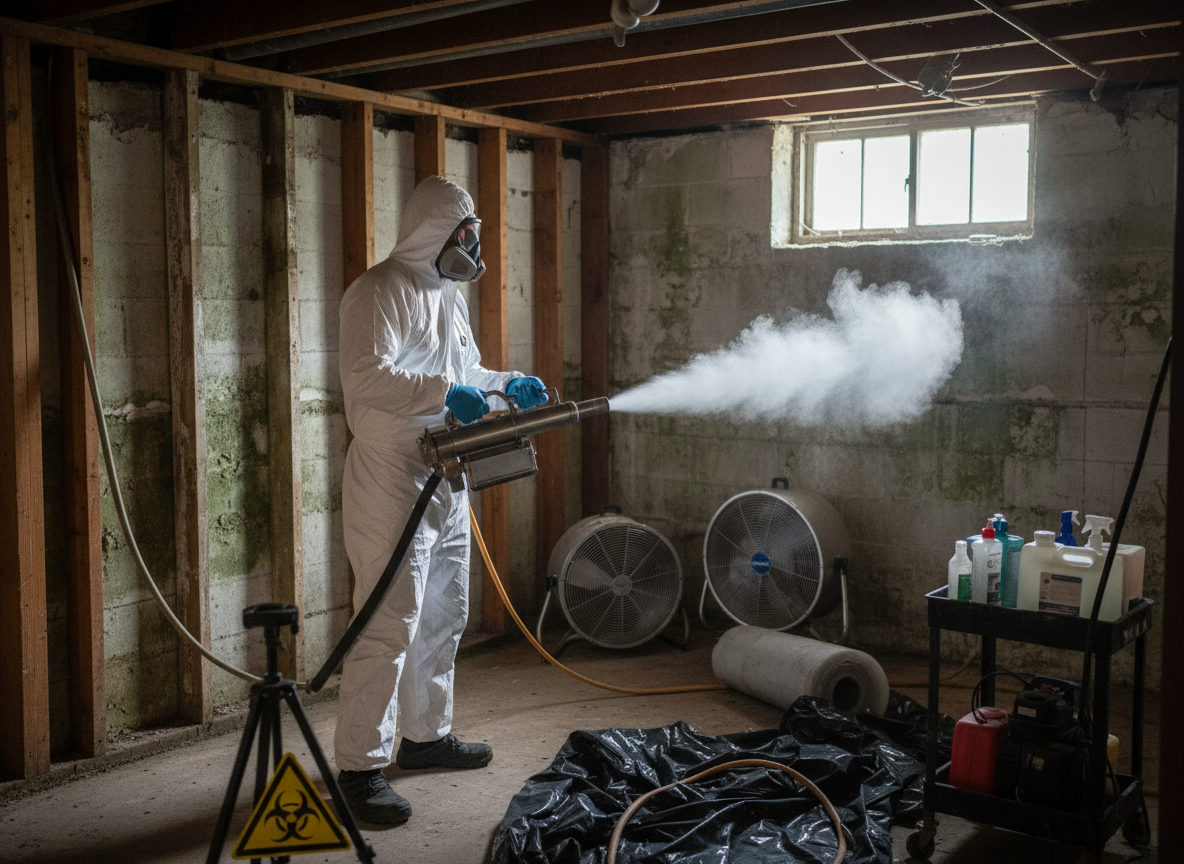
Riverside County building practices in Winchester Ranch frequently include slab-on-grade construction with minimal vapor barriers, so groundwater seepage during heavy winter storms can wick into flooring underlayment and create persistent odors that travel through the entire home. When addressing odor removal mold, technicians must pull baseboards and inspect behind them, then use negative air machines to capture airborne particles before they settle into carpet or upholstery in adjacent rooms. Failure to seal off the work zone allows spores to migrate into living spaces, especially in single-story ranch homes common along Winchester Road near the 92596 zip code.
Air sampling before and after treatment confirms when odors are truly eliminated rather than temporarily covered. In neighborhoods bordering Menifee and Hemet, older stucco exteriors can hide leaks at window frames that only become noticeable when the first dry summer heat activates the smell. Proper odor removal mold work includes HEPA vacuuming of all affected porous materials and application of EPA-registered antimicrobials only after the moisture source is corrected, preventing recurrence during the next seasonal rain event.
Technician insight
In Winchester, the thing that catches most people out with odor removal mold is how our dry summers pull hidden moisture from the soil under 1980s slab homes in French Valley, turning small leaks into widespread musty smells that travel through the entire HVAC system once the heat hits.
Musty Odor After Winter Leak in Winchester Hills
Homeowner in Winchester Hills noticed a persistent smell near the laundry room after heavy winter rain. Inspection revealed water had wicked under the slab from a cracked pipe and activated mold in the subfloor. Crew contained the area, removed the affected underlayment, treated the concrete, and ran hydroxyl treatment through the ducts. Odor was eliminated and air tests cleared the space.
How it works
- 1
Initial Assessment
Technician inspects affected rooms, checks crawlspaces and attics for hidden moisture, and identifies odor pathways in Winchester homes.
- 2
Containment Setup
Negative air machines and plastic barriers isolate the work area to prevent spore migration into clean zones.
- 3
Source Removal
Remove and dispose of contaminated porous materials, then treat remaining surfaces with antimicrobial solutions.
- 4
Odor Neutralization
Apply hydroxyl generators or fogging agents to neutralize remaining musty compounds in air and on surfaces.
- 5
Final Clearance
Conduct air quality testing and verify no residual odors remain before removing containment.
Pricing
Cost depends on square footage affected, depth of hidden growth, and whether HVAC cleaning is required.