Winchester sits in a hot-summer Mediterranean climate where dry summers push homeowners to run air conditioning constantly, creating condensation inside walls and attics of ranch-style houses built in the 1980s and 1990s along Winchester Ranch and French Valley roads. When leaks from irrigation lines or roof penetrations near Diamond Valley Lake go unnoticed, mold quickly spreads behind drywall and under subfloors. Crews from 35952 Winchester Rd respond day or night because spores travel easily through the open floor plans common in these single-story homes, and delays allow growth to reach neighboring rooms before containment is set.
Riverside County building practices in older Winchester Hills properties often include stucco exteriors over wood framing without modern vapor barriers, so moisture from rare winter rains or plumbing failures lingers longer than in newer Menifee or Temecula construction. Technicians must pull baseboards and sometimes sections of stucco to reach hidden colonies, then use negative air machines sized for the larger square footage typical here. Homeowners in Hemet and Temecula who try DIY bleach sprays usually miss the root source inside HVAC ducts that run through attics exposed to extreme heat, leading to rapid regrowth once the system cycles again.
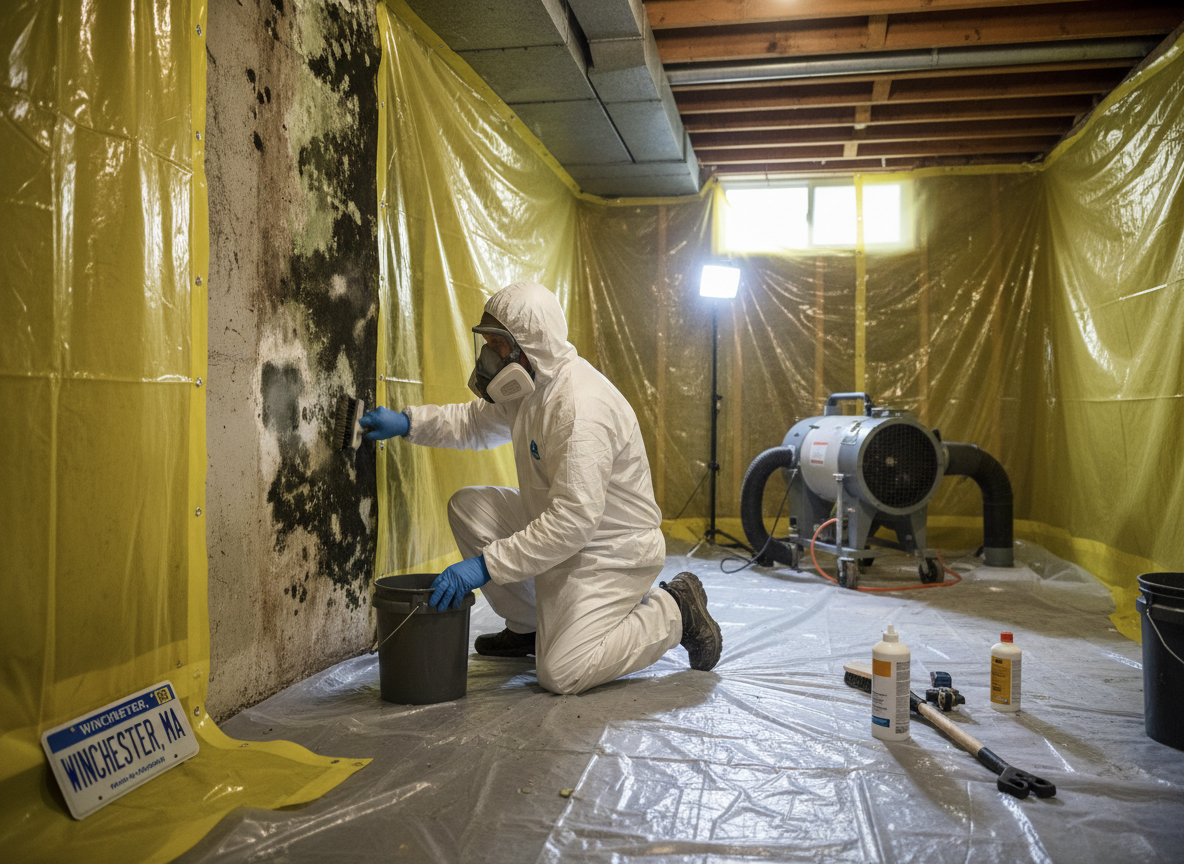
Cleanup protocols for these neighborhoods require separating affected zones with 6-mil poly sheeting sealed at seams because many homes share attic spaces across property lines. After removal, HEPA vacuuming and antimicrobial application follow, followed by moisture meter checks on remaining framing to confirm levels stay below 12 percent before drywall replacement. The dry summer air helps drying times but also makes dust control critical so spores do not become airborne during transport out to disposal sites serving the entire region.
Technician insight
In Winchester the thing that catches most people out with mold cleanup near me is the shared attic space in 80s and 90s ranch homes along French Valley and Winchester Hills roads. One small bathroom leak behind the shower can send spores across three neighboring attics because there are no fire blocks, so the job always expands once you open the ceiling.
Hidden Growth Behind Stucco in Winchester Hills
A homeowner noticed a musty smell after a summer AC issue but no visible spots. Inspection found elevated moisture in the exterior wall where irrigation had seeped behind stucco for months. Crews removed baseboards and lower drywall, contained the room, cleaned framing, and dried the cavity before new drywall went in. Odor was gone and moisture stayed under 10 percent on recheck.
How it works
- 1
Initial Assessment
Technician arrives within hours, inspects all affected rooms plus adjacent spaces, and maps moisture sources using meters and thermal imaging.
- 2
Containment Setup
Plastic barriers and negative air machines isolate the work zone to prevent cross-contamination into living areas or shared attics.
- 3
Removal and Cleaning
Porous materials are removed, surfaces are HEPA vacuumed and treated, and HVAC components are cleaned if mold has entered ducts.
- 4
Drying and Verification
Dehumidifiers and air movers bring moisture levels down, followed by post-remediation testing before barriers come down.
Pricing
Cost depends on square footage affected, depth of hidden growth, and whether HVAC cleaning is required; upfront quotes provided after inspection.