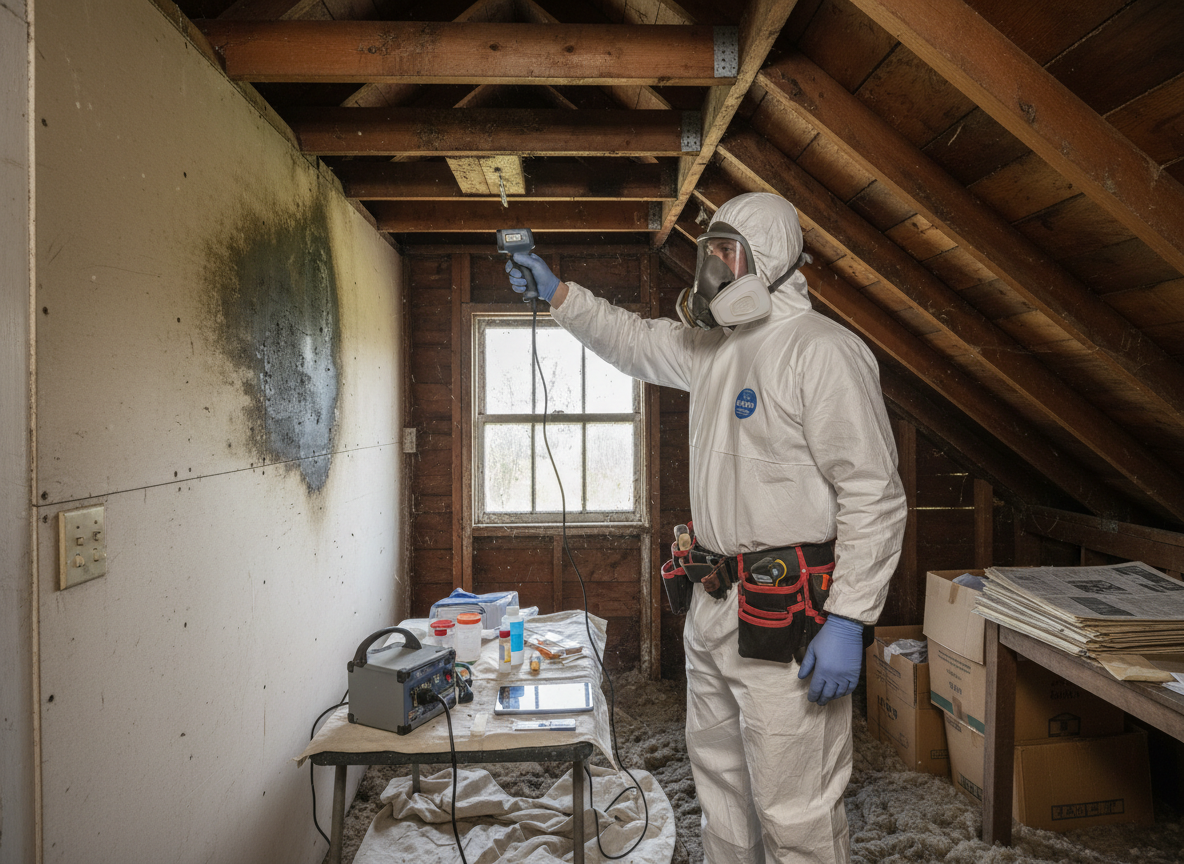
Winchester homes built in Winchester Ranch and French Valley often feature slab foundations and older rooflines that trap moisture during the occasional winter rains common in Riverside County. A home mold inspection here starts with checking attics, wall cavities, and HVAC returns where condensation builds quickly in the hot-summer Mediterranean climate. Dry summers do not eliminate risk; irrigation systems around Diamond Valley Lake properties keep soil damp against foundations, allowing hidden growth behind stucco and in crawlspaces that only a targeted inspection reveals.
Inspectors examine Menifee and Hemet border homes for water intrusion at window seals and plumbing penetrations, areas frequently missed when residents rely on visual surface checks alone. In Temecula-adjacent neighborhoods, older ventilation systems pull humid air through ductwork, spreading spores into living spaces. The process includes moisture meter readings at multiple points and thermal imaging to locate temperature differentials indicating active leaks without unnecessary demolition.
Edge cases include post-rain pooling near Winchester Museum properties where grading slopes toward the house, and mold growth in bathroom exhaust fans that vent into attics rather than outdoors. These conditions require documenting every affected material type and location so remediation crews know exactly which drywall sections and insulation need removal. Homeowners receive a written report noting code-relevant ventilation gaps and any signs of past water events that could affect future insurance claims.
Technician insight
In Winchester, the thing that catches most people out with Home mold inspection is irrigation overspray along French Valley slopes that keeps soil against stucco foundations wet year-round even when the rest of Riverside County is bone dry in summer.
Hidden Attic Moisture in Winchester Hills
Homeowner noticed a musty smell after winter rains but saw no stains on ceilings. Inspection located elevated moisture in the attic above the master bedroom where poor soffit venting allowed humid air to condense on roof sheathing. Thermal imaging confirmed the cold spots; targeted air sampling identified aspergillus growth. The report mapped the exact sections needing ventilation correction and insulation replacement, allowing the remediation crew to work only on affected areas.
How it works
- 1
Site Walk and Moisture Mapping
Technician surveys all accessible interior and exterior areas, records moisture levels at foundation walls, attics, and HVAC plenums using calibrated meters.
- 2
Thermal and Visual Documentation
Infrared scans identify hidden temperature anomalies behind walls and under flooring while photos document visible staining or musty odors in French Valley homes.
- 3
Sample Collection if Indicated
Air or surface samples are taken only when visual or meter evidence suggests active growth, then sent for lab analysis to identify mold types present.
- 4
Report and Recommendations
Detailed findings include location maps, material conditions, and prioritized next steps for remediation without any upselling of unrelated services.
Pricing
Cost depends on square footage, number of stories, and whether samples are required; most Winchester inspections fall in a typical local range.