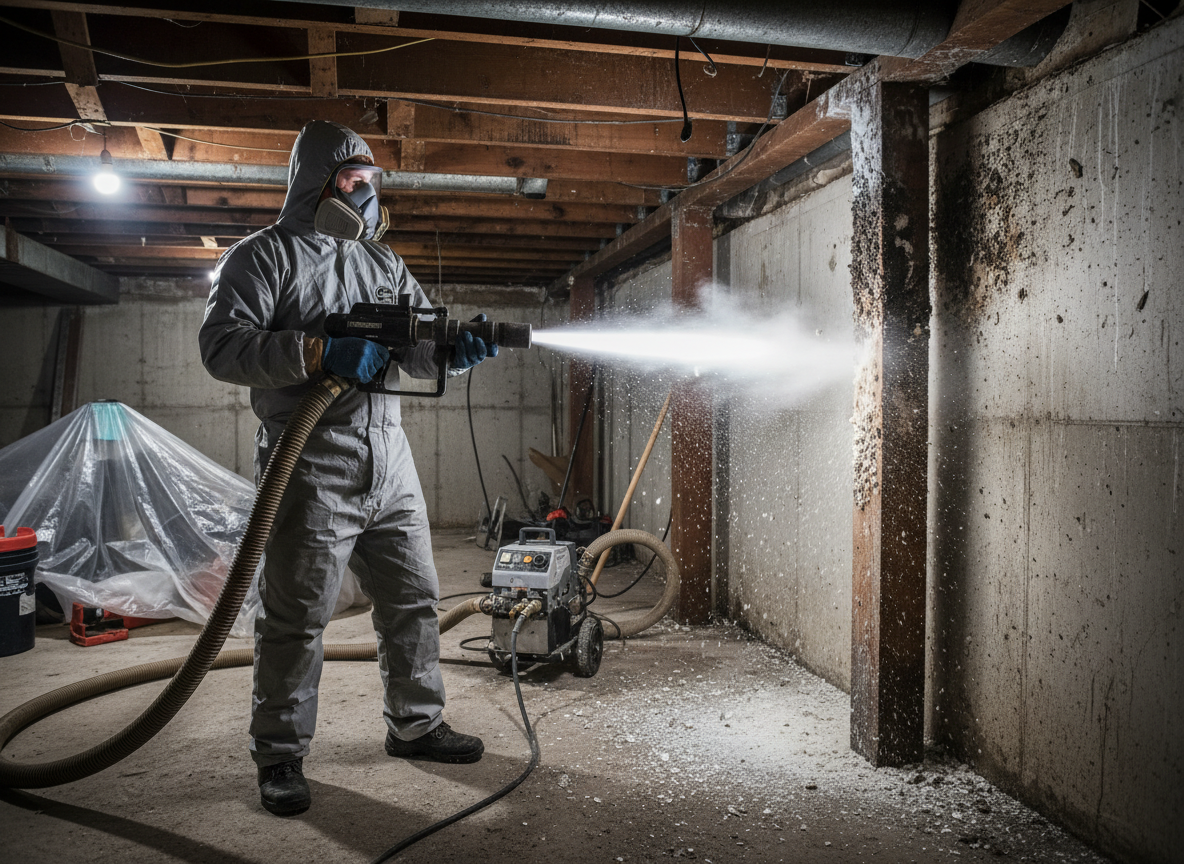
Dry ice blasting uses solid CO2 pellets accelerated at high velocity to remove mold from wood framing, stucco, and concrete without introducing additional moisture. In Winchester's hot-summer Mediterranean climate with dry summers, the method prevents re-wetting that can occur with water-based cleaning during low-humidity months when indoor AC systems run continuously and create condensation on cooler surfaces. Homes in Winchester Ranch and French Valley often feature slab-on-grade construction with limited crawlspace access, making dry ice effective for reaching mold behind baseboards and in HVAC returns without disassembly.
The process requires containment barriers and negative air machines because pellet impact can aerosolize spores into adjacent rooms. Local terrain near Diamond Valley Lake means some properties sit on slopes with poor drainage, allowing irrigation runoff or roof leaks to feed hidden mold colonies in wall cavities. Technicians must map moisture with infrared cameras first, since dry ice alone does not address the water source and incomplete drying leads to recurrence within one season.
Handling Edge Cases in Local Housing
Older stock in parts of Winchester Hills can have lead paint or asbestos-containing texture, requiring pre-testing before blasting to avoid disturbing those materials. Newer builds near Menifee and Temecula roads frequently use engineered lumber that absorbs less but still traps spores in OSB sheathing; dry ice cleans the surface but follow-up HEPA vacuuming is mandatory to meet Riverside County air-quality expectations during real-estate inspections.
Seasonal Timing Considerations
Summer dryness helps surface drying after blasting, yet winter rains can reintroduce moisture through stucco cracks common in the area. Scheduling work before the rainy season allows verification that the structure has dried below 15 percent moisture content using pin meters, reducing callbacks from hidden pockets near French Valley agricultural edges where irrigation overspray affects foundations.
Technician insight
In Winchester, the thing that catches most people out with dry ice blasting mold is irrigation overspray from neighboring lots in French Valley that keeps soil against stucco wet year-round. Homeowners assume the dry summer climate means no moisture problem, yet the real issue is poor grading around 1990s slab homes that channels water straight to the sill plate.
Hidden Mold Behind Baseboards After Roof Leak
A Winchester Ranch homeowner noticed musty odors near the living room after winter rains. Inspection revealed water had traveled along the roofline into the wall cavity and fed mold on the OSB behind the baseboards. Dry ice blasting removed the growth from the framing and sheathing without cutting drywall, followed by targeted drying and source repair. The home passed clearance testing and the odor did not return.
How it works
- 1
Initial Assessment
Inspect affected areas in Winchester Hills or French Valley homes using moisture meters and infrared imaging to locate hidden colonies without disturbing surfaces.
- 2
Containment Setup
Install plastic barriers and negative air machines to isolate the work zone and prevent spore migration into living spaces or HVAC systems.
- 3
Dry Ice Blasting
Apply CO2 pellets at controlled pressure to remove mold from wood, concrete, and stucco while collecting debris with HEPA vacuums.
- 4
Verification and Drying
Re-check moisture levels and air quality, then confirm the structure meets dry standards before removing containment.
Pricing
Cost depends on square footage, access difficulty, and whether additional drying or minor demolition is required; upfront quotes provided after inspection.