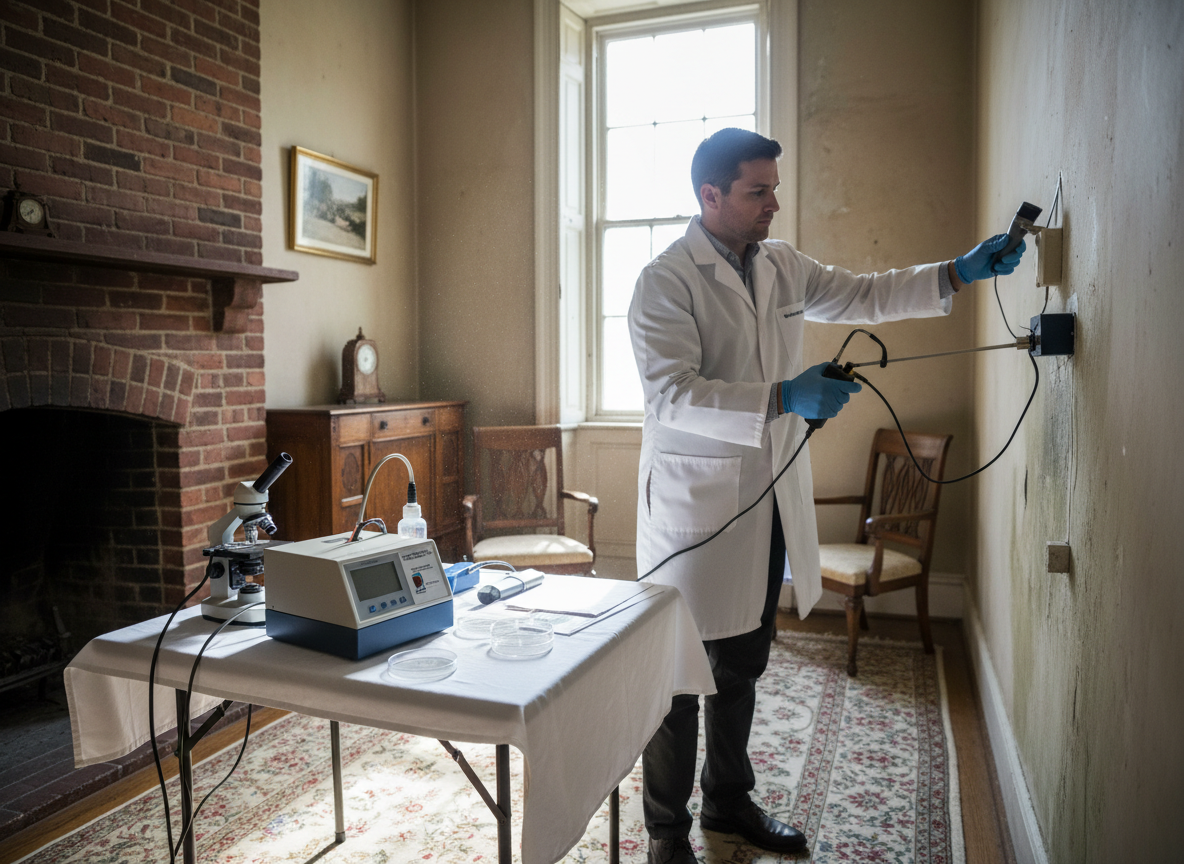
Winchester sits in a hot-summer Mediterranean climate where long dry periods alternate with sudden winter rains. Homes in Winchester Hills and French Valley often have slab foundations and older HVAC systems that trap moisture after storms, allowing mold to develop behind walls or in attics without visible signs. Air sampling here must account for dust from nearby agricultural land and seasonal temperature swings that affect spore movement through ductwork.
Testing in Riverside County neighborhoods like Winchester Ranch frequently reveals hidden growth in crawl spaces where poor grading directs runoff toward foundations. We collect air samples from multiple zones, including living areas and mechanical rooms, then compare indoor spore counts against outdoor baselines drawn from Diamond Valley Lake surroundings. This approach identifies whether elevated readings stem from indoor sources or infiltration from nearby Temecula or Menifee winds carrying outdoor particulates.
Edge cases include post-remodel properties where new drywall traps construction moisture and older single-story homes with evaporative coolers that recirculate spores. We document pressure differentials and humidity levels room by room because dry summers can mask active growth until the next rain event raises indoor moisture. Reports include chain-of-custody details for any samples sent to labs and note any code-related ventilation concerns common in Hemet-adjacent builds.
Technician insight
In Winchester, the thing that catches most people out with air quality and mold testing is the dry summers that let hidden moisture from winter rains linger inside wall cavities of 1980s-1990s homes in Winchester Hills and French Valley; homeowners often skip testing the HVAC return because the air feels dry, yet that is where we find the highest spore loads after the first Santa Ana wind event.
Hidden Spores in French Valley HVAC
A single-story home in French Valley showed musty odors only when the AC ran. Sampling found elevated Aspergillus in the return plenum while living areas read normal. We isolated the source to a poorly sealed attic access allowing attic dust and occasional roof leak moisture to enter the system. After targeted cleaning and sealing, follow-up testing confirmed levels matched outdoor baselines from the Diamond Valley Lake area.
How it works
- 1
Site Assessment
Walk through the property noting moisture sources, HVAC layout, and occupant complaints while recording conditions in Winchester Ranch or French Valley homes.
- 2
Air Sampling
Place spore traps and particle counters in multiple rooms plus an outdoor control near Diamond Valley Lake to establish local baselines.
- 3
Laboratory Analysis
Submit samples for genus-level identification and count comparison against regional outdoor norms for Riverside County.
- 4
Findings Report
Deliver written results with location-specific recommendations for remediation or further inspection based on the tested property.
Pricing
Cost depends on number of samples, property size, and whether additional surface or wall cavity testing is needed.