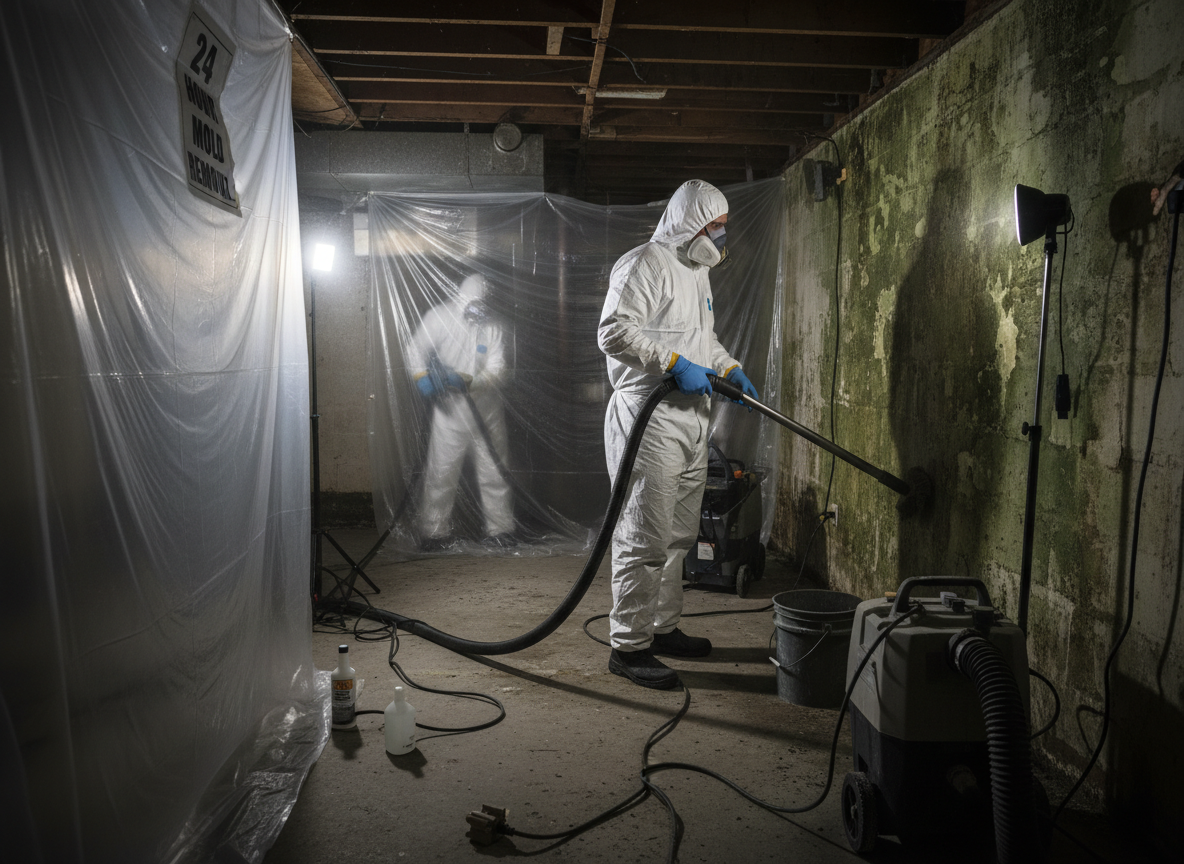
Winchester sits in a hot-summer Mediterranean climate where dry summers alternate with occasional heavy rains that push moisture into crawl spaces and attics of ranch-style homes built from the 1980s onward in Winchester Ranch and Winchester Hills. When water intrudes through roof penetrations or poor grading near Diamond Valley Lake, mold colonies can appear within 48 hours on drywall and insulation. Our 24 hour mold removal crews start with containment using plastic sheeting and negative air machines to keep spores from migrating into living areas while we remove affected materials down to the studs.
Many homes in French Valley sit on clay-heavy soils that hold water against foundations after storms, creating hidden growth behind baseboards and under flooring. We use moisture meters and infrared cameras to locate damp pockets that visual inspection misses, then cut out and bag contaminated drywall and carpet in sealed containers for disposal. In Riverside County, proper disposal follows local landfill rules for construction debris, and we document every step with photos for homeowners dealing with insurance claims.
Edge cases we see include mold returning in bathrooms where exhaust fans vent into attics instead of outdoors, common in Temecula and Hemet tract homes. We seal those vents and install proper exterior terminations during remediation. After removal we apply EPA-registered antimicrobials only to remaining wood framing, never as a substitute for physical removal of moldy materials. Homeowners should avoid running HVAC systems until clearance testing confirms spore levels have returned to normal outdoor baselines.
Technician insight
In Winchester the thing that catches most people out with 24 hour mold removal is how fast moisture travels through the stucco and slab foundations common in Winchester Hills homes built on the old dairy land. One small roof leak after a rare summer storm can wick water 10 feet along the slab edge before anyone notices, so we always pull baseboards two rooms away from the obvious spot.
Hidden Growth Behind Kitchen Cabinets
A homeowner in Winchester Ranch noticed a musty smell near the sink after monsoon rains. We found water had wicked under the slab and up into the particleboard cabinets and drywall behind them. We removed the lower cabinets, cut out the wet drywall, dried the framing, and replaced the materials; clearance tests passed two days later.
How it works
- 1
Emergency Assessment
We arrive within hours, inspect all affected rooms plus adjacent spaces, and map moisture sources using meters and thermal imaging.
- 2
Containment Setup
Plastic barriers and HEPA air scrubbers isolate the work zone so spores do not spread to unaffected areas of the home.
- 3
Removal and Disposal
We cut out and bag moldy drywall, insulation, and flooring, then remove and dispose of the materials following Riverside County guidelines.
- 4
Drying and Treatment
Industrial dehumidifiers and air movers dry the structure, followed by antimicrobial application on exposed framing where needed.
- 5
Clearance Testing
Independent air sampling confirms spore counts match outdoor levels before we remove containment and return the space to normal use.
Pricing
Upfront quotes provided after inspection; final cost depends on square footage affected and whether hidden damage is found behind walls or under floors.